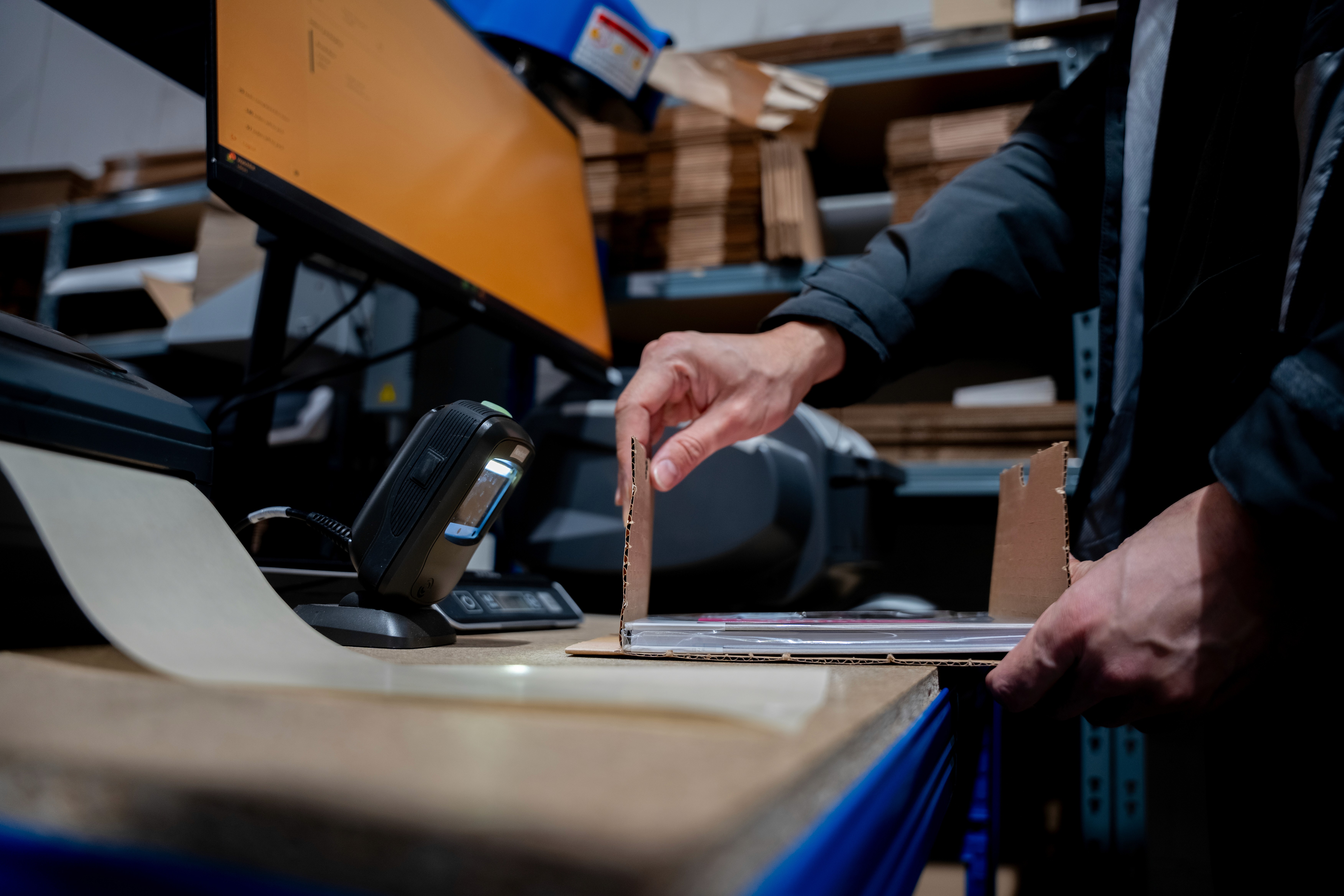
At some point, almost every growing Ecommerce brand runs into the same wall. Orders are coming in faster than you can pack them, your spare room is full and you're spending more time at the Post Office than you are building your business.
That's usually when the term "3PL" starts coming up. So here's everything you need to know without the logistics jargon.
What Does 3PL Mean?
3PL stands for third-party logistics. It refers to a company that handles the storage, packing and shipping of your products on your behalf so instead of managing all of that yourself, you hand it to a specialist.
In practice, your products live in their warehouse. When a customer places an order, it flows automatically to the 3PL's system and their team picks, packs and ships it out under your brand. From your customer's perspective, nothing looks different. The box, the tape, the tissue paper, the inserts — it's all yours. The only thing that's changed is who's doing the work.
Think of it as having your own fulfilment operation, the warehouse space, the team, the systems, without the overhead of building and managing it yourself.
75% of businesses think at least some level of third-party logistics support is ideal, according to research across 21 areas of supply chain management.
How Does A 3PL Actually Work?
It starts with you sending your stock to the 3PL's warehouse. When it arrives, it gets logged into their warehouse management system (WMS), the software that tracks exactly what you have, where it's stored and how much is left. From that point on, you have real-time visibility of your inventory without physically being near it.
Your online store then connects directly to the 3PL's system. Most providers integrate with platforms like Shopify, WooCommerce and Amazon, which means when a customer places an order, it's automatically sent through for fulfilment. No manual process, no spreadsheet to update.
When an order comes in, the team picks and packs to your specification, then ships via the most appropriate carrier for that destination. Your customer gets a dispatch notification, a tracking link and their parcel.
Returns work in reverse. When a customer sends something back, it comes to the warehouse. The 3PL checks the item, processes the return and restocks it if it's in good condition, all without you needing to be involved.
What Does Switching to Hutch Actually Get You?
Here's what Ecommerce brands typically see when they move their fulfilment to Hutch.
More time back in your week
Founders using Hutch reclaim an average of 10-15 hours per week previously spent on packing, stock management and carrier coordination. That's time that goes back into marketing, product and growth, the things that actually move the needle.
Orders out faster
Hutch operates same-day dispatch on orders placed before 4pm, with next-day delivery available across the UK. For international shipments, our carrier relationships give you access to transit times and rates that would be difficult or expensive to replicate independently.
Shipping costs that go down, not up
Because Hutch ships thousands of parcels a week across multiple clients, you benefit from consolidated carrier rates. Most brands see a meaningful reduction in their per-parcel shipping cost when they switch, often enough to offset the cost of outsourcing entirely.
3PLs can move thousands of loads per day, which means they're often able to negotiate better rates on your behalf based on total volume. Even though they take a margin, the price you pay can still be lower than going direct.
Error rates close to zero
Every order goes through systematic pick, pack and quality checks before it leaves the warehouse. Hutch clients typically see order accuracy rates above 99.8%, compared to the 2-5% error rates that are common when brands are self-fulfilling at volume.
Full visibility, all the time
Real-time stock levels, order status, dispatch notifications and returns tracking, all in one place. No more chasing couriers or manually reconciling spreadsheets. You always know exactly where things stand.
Growth without the growing pains
Whether you're shipping 100 orders a week or 10,000, the operation scales without you needing to hire, lease more space or change anything on your end. Hutch handles Black Friday the same way it handles a quiet Tuesday, without the stress landing on you.
According to research across 500+ businesses, there wasn't a single area of supply chain management where a majority thought fully in-house was the ideal approach.
What To Look For In A 3PL
Not all 3PLs are built the same. Here's what to focus on when evaluating your options.
Pricing transparency is probably the most important thing to get right upfront. The 3PL industry has a reputation for complex invoices, storage charges, handling fees, minimum order surcharges, fuel levies and more. Before you commit, make sure you understand exactly what you'll be paying and when. If the pricing structure requires a lot of explanation, the invoices will too.
Technology matters equally. Your 3PL's systems need to connect cleanly with your Ecommerce platform, your returns process and any other tools you rely on. Poor integrations create manual work and increase the risk of errors. Ask specifically about which platforms they integrate with and how the connection is maintained.
Communication only becomes obvious when something goes wrong and at some point, something will. A parcel gets lost, a stock count doesn't match, an order goes out incorrectly. What matters is whether you can get hold of someone quickly and whether the problem gets resolved efficiently. Ask about their support model before you sign anything.
Relevant experience makes a real difference. A 3PL that specialises in direct-to-consumer Ecommerce thinks very differently from one built around B2B wholesale. The right operational mindset, attention to packaging and familiarity with your platforms makes everything run more smoothly.
The Bottom Line
Outsourcing your fulfilment to a 3PL isn't just a logistics decision. It's a decision about how you want to spend your time and what kind of business you want to build.
The brands that make the switch at the right moment tend to find it one of the best decisions they've made. Orders go out faster, customers have a better experience and the founder gets to focus on growth rather than operations.
Hutch is a UK 3PL built for ambitious Ecommerce brands. We offer transparent pricing, seamless integrations and a team that actually picks up the phone. If you'd like to find out whether we're the right fit for your business, get in touch and we'll talk you through how it works.
This article was last updated March 2026.
Published by Hutch Logistics
Helping growing Ecommerce brands deliver world-class fulfilment experiences.